
Thermal
Resistivity Testing
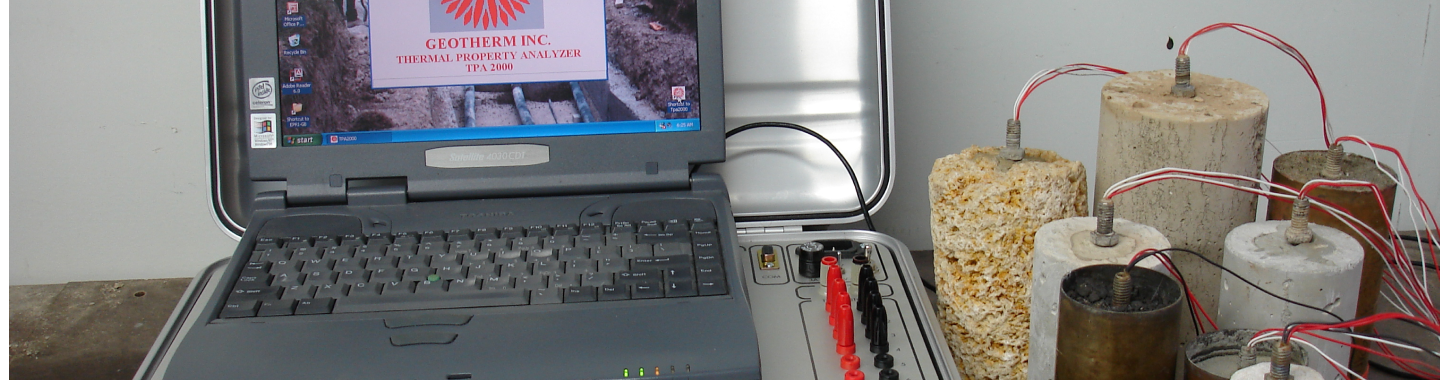
Geotherm takes the lead in conducting thermal resistivity measurements by adhering to the industry accepted standard/guidelines IEEE 442-2017.
The quality of thermal resistivity of soil and backfill materials is governed by various factors.
Some of the important factors are mineralogy, density, moisture content and porosity. Their intricate relationship determines its efficiency to dissipate heat generated by the losses of energized cables. This parameter, thermal resistivity is often referred to as 'thermal Rho' and is quantified in °C-cm/W or K.m/W units.
Geotherm takes the lead in conducting thermal resistivity assessments by adhering to the industry accepted standard - IEEE 442-2017 guidelines - Thermal Resistivity Measurements of Soils and Backfill Materials. Collaboratively prepared by cable engineers, this guide is written for underground and submarine power cable evaluations. The findings has a significant impact on the system design for cost-effective and long-term operation that can extend several decades.
Understanding the thermal properties of the materials used in underground power systems (external thermal circuit) is crucial in cost-effective design. This applies not only for the native soil but more importantly the concrete and/or backfill envelope around the cables to properly determine size and capacity of the cable.
Other thermal parameters such as diffusivity, stability, and specific heat are of lesser importance and therefore measured when deemed necessary.
